Contract Lifecycle Management Solution
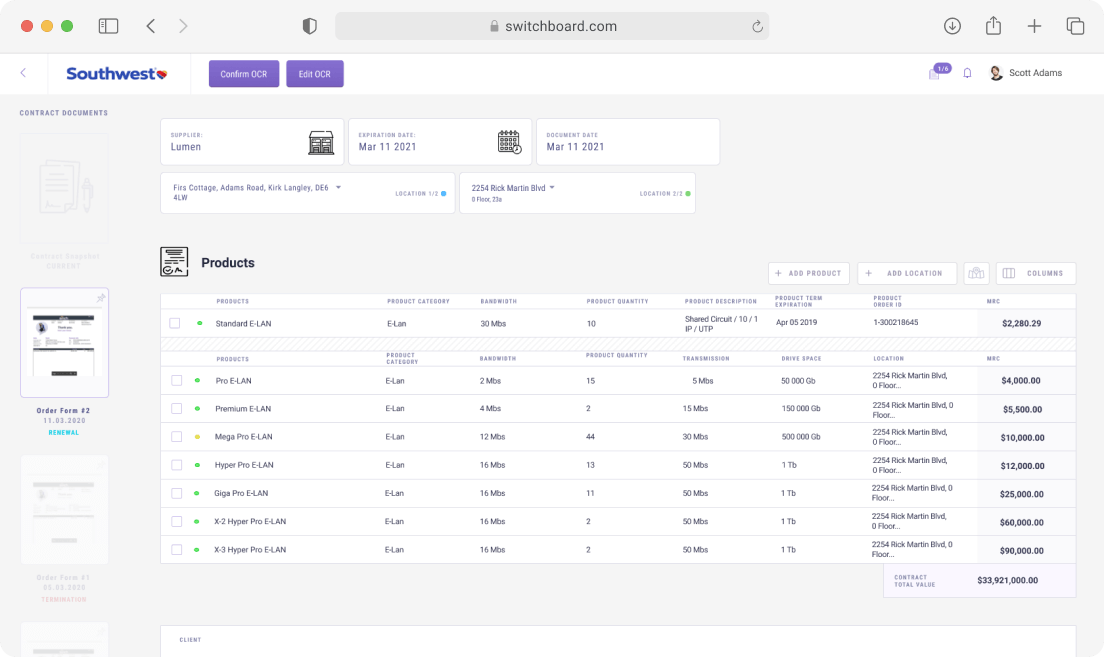
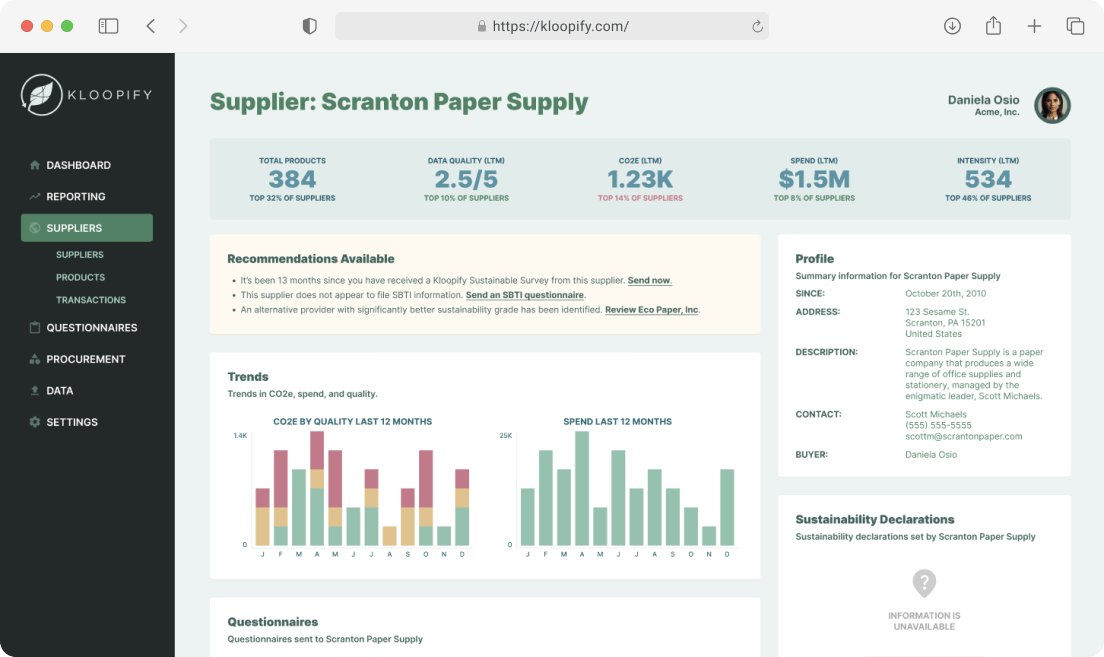
Using Python / Django, React.js, AWS services, and cloud AI-based OCR to design and build a document processing software enabling supplier negotiations and contract management

Custom web application development creates software around your workflows, data, and growth goals. SoftKraft helps CTOs and founders reduce delivery risk through discovery, architecture, UX, engineering, QA, and support.










Custom web application development covers discovery, UX/UI, architecture, engineering, data design, third-party integrations, QA, deployment, and post-launch support.

Define user journeys, success metrics, and a prioritized delivery scope before engineering starts.

Build a secure, maintainable B2B application with architecture selected for your data, integrations, traffic, and team.

Design data models, access rules, and storage patterns for reliable reporting, performance, and future AI use cases. See how to choose a scalable web application architecture.

Connect CRM, ERP, payments, analytics, and external APIs through tested, observable integration flows.
Discuss your product goals, data, integrations, security constraints, and expected scale with an engineering manager. You will leave with clearer next steps and the right discovery path. We select the backend from workload, data, integration, and team constraints—compare Django and Node.js for a B2B product before committing to a stack.





By implementing ISO 27001 and other certifications, we ensure that our software development services are secure, reliable, and compliant with the highest industry standards.




 Our Commitments to You
You can trust that your data is safe and secure with our ISO 27001 certification and best practices in security and data protection.
You get piece-of-mind with our QA processes that adhere to the highest standards for delivering enterprise-grade software products.
You can count on us to quickly adjust to changes in your project needs and provide engineering talent with the required skills.
Work with engineers averaging 9 years of experience who challenge scope, architecture, and implementation choices before they become expensive.
Review working software at the end of each sprint and use acceptance feedback to reprioritize the backlog.
Product, design, engineering, QA, and DevOps align around the release outcome, not isolated activity.
Continue with monitoring, maintenance, and an agreed SLA or support capacity after production release.
We partner with entrepreneurs, business and technology leaders to bring their innovative software-driven products, processes, and business ventures to life.

See how SoftKraft delivered contract management, procurement analytics, and workforce training products that turn complex data and operational workflows into maintainable SaaS platforms.
Using Python / Django, React.js, AWS services, and cloud AI-based OCR to design and build a document processing software enabling supplier negotiations and contract management
Building a SaaS product that leverages AI/ML to analyze procurement processes for Scope 3 emissions impact
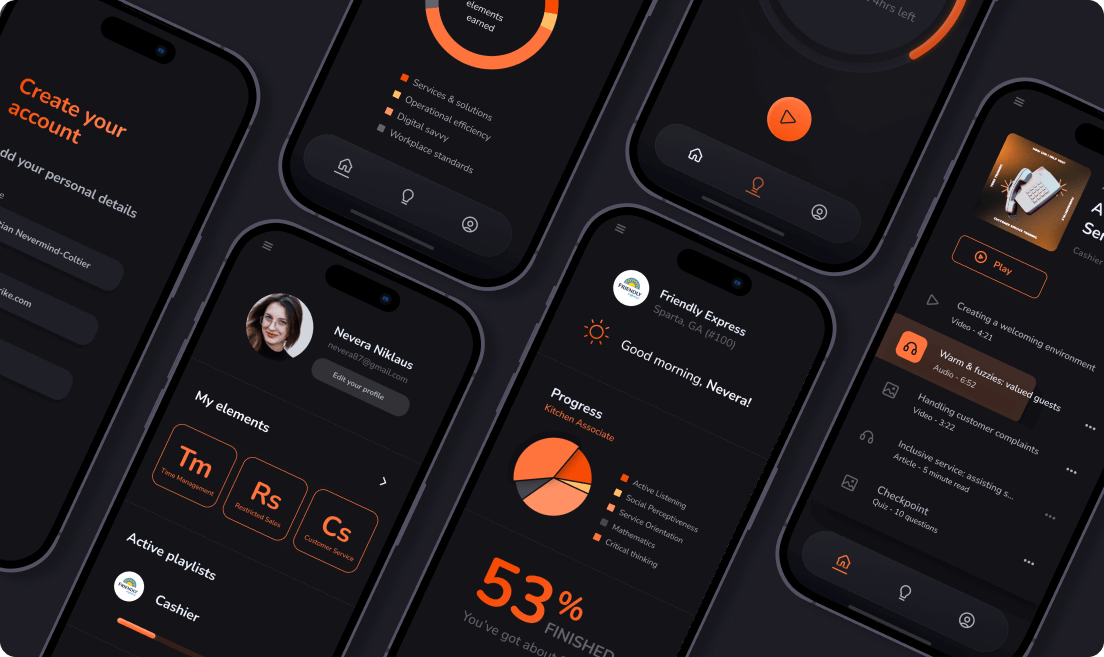
Platform architecture design, React Native mobile apps, Python backend web app development, testing, and QA of a learning experience MVP
Four stages from discovery to production support. Each sprint ends with a working software demo.
Define users, outcomes, constraints, architecture, the first releasable slice, and an initial budget range.
Build, test, demo, and refine working software in short iterations with transparent backlog decisions.
Complete acceptance testing, performance and security checks, deployment, and production readiness.
Monitor the application and continue improvements under an agreed SLA or capacity model.
A simple data integration project takes about 2 to 4 weeks, while a complex custom web application takes 4 to 24 months. The range depends on how many user workflows you need, the state of your data, the number of integrations, security and compliance requirements, and how quickly decisions are made on your side.
We reduce that uncertainty during discovery by defining a first releasable slice and delivering it in short sprints, so you see working software early instead of waiting for a full release. After discovery you receive a delivery plan with milestones and a realistic release window—see a complex build in production.
Cost is based on an hourly rate and the team composition your product needs, and we estimate it in two steps. First, an approximate range built on your goals, target users, integrations, and the problem the application must solve. Second, a product discovery workshop that turns that range into a prioritized backlog, so the estimate reflects real work instead of assumptions.
From there we bill against an agreed sprint capacity and provide detailed cost breakdowns with regular progress updates. When scope changes, you see the cost impact before the work starts, which keeps budget decisions with you.
We control all three through agile delivery with one prioritized backlog and a fixed sprint capacity. Discovery produces the initial estimate and the scope your budget can support; the product discovery workshop then aligns you and the team on what ships first.
During delivery the Product Owner manages the backlog, you approve budget and priorities, and the team commits only to what fits the sprint. Every sprint ends with a working demo and acceptance feedback, so trade-offs are made against visible progress rather than status reports. Read more in our guide to Agile Outsourcing.
We build most backends with Python and Django, and frontends with React, Next.js, or Vue.js. The choice follows your workload, data model, integrations, compliance requirements, and the stack your team can maintain after handover—not a fixed house preference.
Django suits data-centric B2B platforms with clear domain rules, reporting, and admin workflows; see when Django fits B2B business software. For an early-stage product, evaluate Django for a startup MVP against your real-time needs, security requirements, and hiring plan. We document every architecture decision and its trade-offs during discovery, so your own engineers can review it.
We build and test every integration in an isolated non-production environment with realistic data before it touches production. First we review the provider documentation and API, confirm compatibility, and define exactly what data crosses the boundary. Then we implement authentication, secrets handling, error handling, and retries, and validate the flow against your acceptance criteria.
Deployment happens only after the integration proves resilient under failure conditions. After release we monitor it, log failures, and adjust as provider APIs change. Our ISO 27001-certified delivery process governs access control and data handling across CRM, ERP, payment, and analytics connections.